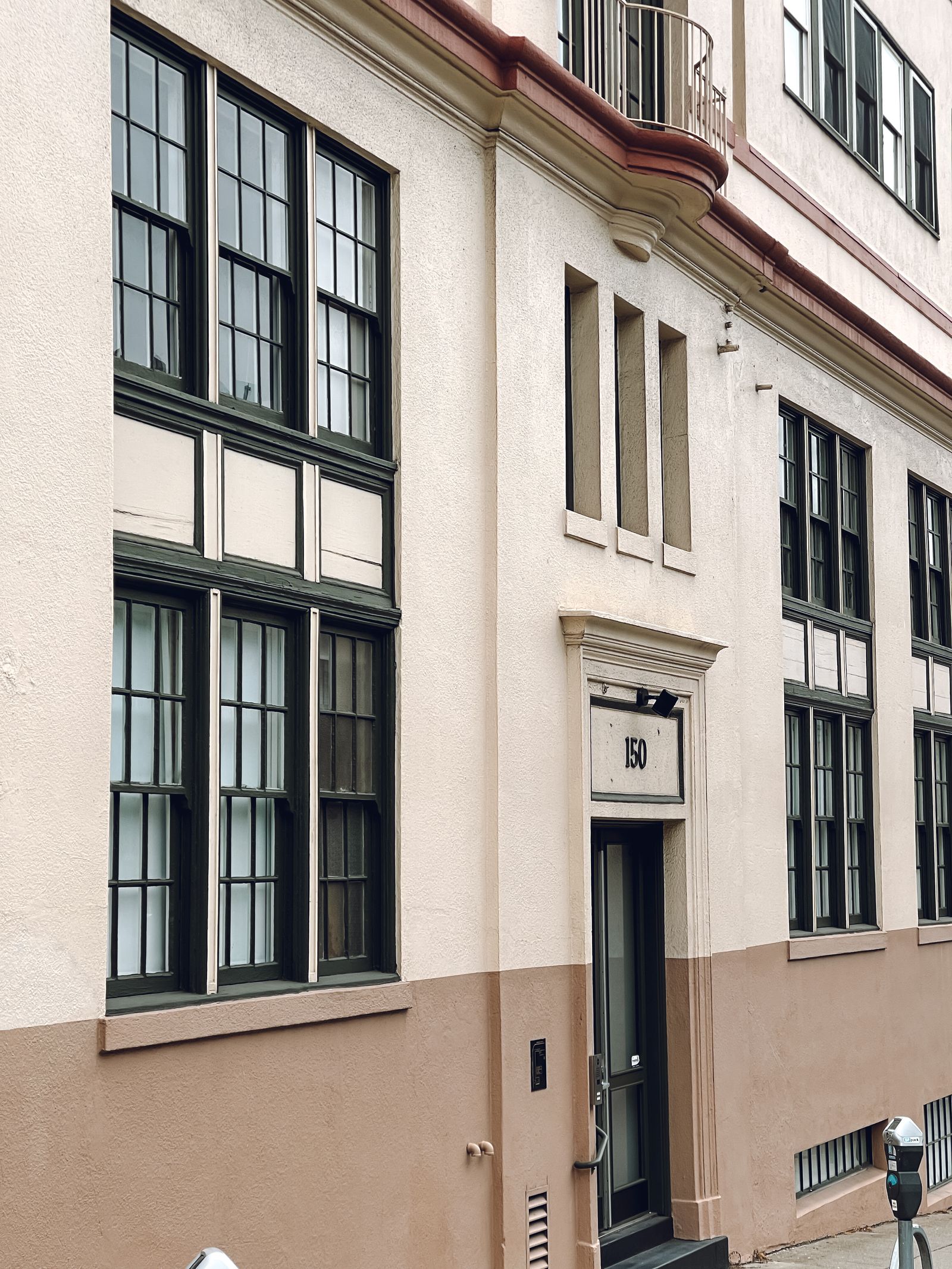
Start with Baltimore facade materials and the result you need
Baltimore buildings often combine historic brick, aging mortar, stone, concrete, precast, replacement windows, metal panels, painted trim, sealants, EIFS, and repairs from several ownership periods. A rowhouse or mixed-use elevation in Fells Point, Canton, Mount Vernon, or Federal Hill may place delicate masonry beside storefront glass and painted details. A hotel near the Inner Harbor may add broad wall sections, balconies, canopies, signs, and guest-facing entrances. A warehouse, terminal, or industrial building near Dundalk or Curtis Bay may have large metal panels, loading zones, and road or marine film. We separate those materials and visible conditions before selecting chemistry, pressure, dwell time, rinse volume, or access.
Soft washing can be a good fit for compatible organic growth, pollen, bird residue, and atmospheric soil. It is not a repair method for cracked masonry, failed joints, loose coatings, spalled concrete, active leaks, corroded attachments, or moisture entering an exterior wall. A dark streak may be algae, soot, oxidation, salt, mineral residue, traffic film, or a shadow from a failed component. A test area is particularly useful where masonry is porous, coatings are aged, or an owner expects a consistent appearance across several elevations. The quote should explain the expected improvement and identify conditions that need specialty restoration or another building professional.
- Separate brick, mortar, stone, precast, concrete, glass, metal, EIFS, stucco, and painted zones.
- Identify harbor film, road soil, organic growth, mineral deposits, oxidation, and pre-existing damage.
- Define whether the goal is a maintenance rinse, visible facade reset, or detailed finish.
- Keep repairs, leak diagnosis, coating replacement, and restoration outside routine washing.
Plan around Baltimore neighborhoods and occupied property operations
The Inner Harbor, Harbor East, Fells Point, Canton, Federal Hill, Mount Vernon, and Downtown can put cleaning activity close to pedestrians, restaurants, hotels, event crowds, deliveries, rideshare movement, and narrow sidewalks. A property near Camden Yards, M&T Bank Stadium, the National Aquarium, or the convention center may have a short work window before an event changes access. Charles Village, Remington, Hampden, and the Johns Hopkins area bring different mixes of campus traffic, medical operations, rowhouse streets, storefronts, and limited staging. These neighborhood details help plan the work, but the site team still confirms the actual restrictions at the address.
Before work begins, we ask about hotel check-in, breakfast, patient and visitor routes, tenant hours, deliveries, outdoor seating, event calendars, security, accessible paths, emergency access, and the person who can pause the job. A long frontage may be divided into zones so one entrance remains usable while another elevation is cleaned. A medical or research property may need facilities and security coordination around air intakes, sensitive equipment, and patient movement. An occupied rowhouse or mixed-use block may require smaller staging, neighbor communication, and careful hose routing. The best result is not useful if it blocks an accessible route or surprises guests, residents, staff, or customers.

Account for harbor exposure, Chesapeake weather, and seasonal residue
Baltimore's harbor and Patapsco waterfront expose some properties to persistent moisture, wind, salt-laden air, bird activity, and airborne material from roads, marine operations, and nearby construction. Lower walls beside parking lots and busy streets can collect splash, grit, and deicing residue differently from upper elevations. Shaded masonry in a narrow rowhouse court may remain damp longer than a sun-exposed wall. Spring pollen, humid summers, tropical-weather rain, autumn debris, and winter freeze-thaw cycles can each change the appearance and workability of a facade. A cleaning interval should follow the property's exposure, condition, and operating needs rather than a generic promise for every Baltimore building.
Weather is a safety and finish condition, not just a scheduling detail. Wind can move spray, hoses, or aerial equipment toward people, vehicles, windows, landscaping, and neighboring property. Rain can dilute an application and change the path of rinse water. Lightning, freezing temperatures, icy pavement, and sudden storms can require a pause or reschedule. After winter, the crew may need to distinguish ordinary soil from deicing residue, efflorescence, corrosion, or surface damage. If staining returns below a gutter, roof edge, irrigation line, or failed joint, the closeout should flag the likely water or envelope source instead of promising that repeated washing will solve it.
Use drone assistance only where the Baltimore site supports it
A drone is one tool inside a complete access and safety plan. On a suitable property, drone-assisted equipment may apply a selected solution or rinse to broad upper facade zones while a trained ground team manages hoses, water, spotters, communication, public controls, and closeout. That can reduce some lift staging for compatible maintenance work. It does not make fragile chemistry safe, eliminate the need for testing, or provide a hand-cleaned finish. The proposal should identify the elevations where aerial work is expected and the areas that still need a lift, pole, ground crew, or contact detail.
Baltimore building geometry can make feasibility change from one side of a property to another. Balconies, deep overhangs, trees, wires, rooftop equipment, signs, parking structures, public sidewalks, moving vehicles, port operations, and adjacent buildings can limit stand-off distance or ground control. Properties near Baltimore/Washington International Thurgood Marshall Airport, downtown events, hospital helicopter activity, or port facilities need a current airspace and site review. Commercial operators must follow applicable Federal Aviation Administration requirements; owner permission coordinates the property but does not replace aviation rules or authorization.
Contact methods remain important for entrance glass, frames, recessed details, bonded deposits, delicate trim, and any result requiring brushing, scraping, polishing, or squeegee pressure. A hybrid plan may use drone-assisted rinsing on a broad upper wall, a water-fed pole on selected windows, and hand work around a canopy or storefront. The right recommendation matches the requested finish and the building, not the newest tool everywhere.
Protect people, landscaping, equipment, and harbor-bound drainage paths
Before applying water or chemistry, map doors, accessible paths, public sidewalks, loading zones, parking aisles, tenant entrances, air intakes, outdoor seating, cameras, lighting, sensitive equipment, planted areas, curb inlets, and low points. Baltimore properties can have steep or uneven pavement, structured garages, landscaped courtyards, narrow alleys, and drainage routes that move water away from a wall faster than expected. The work plan should identify hose routes, barriers, spotters, protection, water access, and the person authorized to stop the job. If an unexpected pedestrian, vehicle, gust, or drainage change enters the work zone, pausing is part of the plan.
Wash water is a site-specific issue. The products used, soil removed, rinse volume, surface slope, storm inlets, sanitary connections, harbor proximity, and applicable jurisdiction all matter. Baltimore City and Maryland authorities publish stormwater and discharge information, but a general webpage does not approve every discharge at a private property. Depending on the activity, controls may include diversion, collection, recovery, reduced rinse volume, protection of plants and doors, filtration, disposal, or coordination with the responsible authority. The quote should state assumptions and stop conditions so facilities staff understand how the team will respond when actual flow differs from the initial review.
- Locate drains, low points, landscaping, doors, air intakes, vehicles, and sensitive equipment.
- Confirm water access, hose routing, public controls, and emergency routes before setup.
- State the intended water-management approach and what happens if the flow path changes.
- Photograph completed zones and note remaining deposits, repairs, or contact-cleaning needs.
Request a quote tied to your priority Baltimore elevations
A useful commercial soft-washing proposal should name the service zones, materials, visible soil, included features, proposed method, intended finish, exclusions, water assumptions, access approach, operating window, weather limits, and closeout documentation. It should separate broad facade washing from high-detail glass cleaning, hard-water removal, salt or marine residue, construction film, graffiti, coating work, masonry repair, and envelope inspection. If drone assistance is proposed, the scope should explain the conditions that must be present and where another method remains necessary.
Send the Baltimore property address, wide and close photographs, approximate height, priority elevations, known materials, visible concerns, preferred dates, water access, drainage information, and tenant, guest, patient, resident, delivery, or event restrictions. Include hotel calendars, stadium dates, port or loading requirements, security rules, parking limits, and prior maintenance or repair notes. Those details help determine whether a remote review, site visit, test area, or hybrid access plan should come next. We can quote a one-time appearance improvement, phased priority cleaning, or recurring exterior maintenance program around the way the property actually operates.
Drone Building Cleaners helps Baltimore property teams evaluate hotels, offices, rowhouse and mixed-use buildings, medical and academic facilities, retail centers, industrial sites, warehouses, garages, campuses, and port-adjacent properties. Call +1 239-351-2897, email contact@dronebuildingcleaners.com, or submit the quote form with the building details. We will explain what can be cleaned, which access method fits, what may remain, and what should be referred to another professional before work is scheduled.