Soft washing is a chemistry-and-surface decision
Soft washing generally relies more on a compatible solution, dwell time, and controlled rinse than on impact force. It may fit organic growth, pollen, bird residue, and atmospheric film on selected brick, masonry, stucco, EIFS, painted surfaces, and other tested materials. Lower pressure can reduce some mechanical stress, but it does not eliminate risk from chemistry, dwell, temperature, wind, plant exposure, or water entering failed joints. A test area should be evaluated after drying when a Baltimore facade has an unknown coating history, salt exposure, or a demanding owner finish standard.
Baltimore buildings often combine several substrates in one service zone. A Downtown office may include historic brick, replacement windows, metal trim, precast, sealants, and concrete entrances. A waterfront hotel may add balconies, canopies, signs, and areas exposed to bird residue and marine air. A port or industrial property may use durable metal panels and concrete but still contain office entries, painted equipment, or sensitive electrical components. The method must be selected by surface and condition, not by the idea that a building should be washed with one pressure setting from top to bottom.
Pressure washing can fit selected durable zones, not every facade
Pressure washing can be useful for some durable concrete, loading areas, sidewalks, decks, curbs, and hardscape when the operator controls distance, nozzle selection, flow, runoff, and surrounding assets. Even on concrete, excessive force can etch the surface, expose aggregate, move joint sand, damage coatings, or drive water into cracks and openings. On brick, mortar, painted surfaces, EIFS, stucco, older stone, and window assemblies, the same force may cause damage or leave an uneven result. A strong spray does not automatically remove mineral deposits, oxidation, marine residue, failed coating, or a stain whose source is still active.
For Baltimore properties, lower walls often carry a mix of road splash, winter salt, harbor moisture, soot, and organic material. A pressure-wash pass may change the appearance without addressing the reason a mark returns below a leaking gutter, failed joint, roof edge, or irrigation line. The proposal should identify the deposit, the surface, the intended improvement, and the point at which the work becomes restoration, contact detailing, repair, or investigation. This keeps a facilities team from approving aggressive cleaning where a building-envelope issue should be addressed first.
Compare the methods against Baltimore's real access and finish needs
Method selection should start with the result. A hotel may need a guest-ready entrance, canopy, sign band, and upper wall before a busy weekend. A rowhouse or mixed-use owner may prioritize consistent brick appearance without damaging mortar or interrupting residents. A medical facility may prioritize predictable controls around patients, visitors, air intakes, and accessible paths. A port or warehouse operator may prioritize broad improvement on high walls while preserving loading operations. Those goals can lead to different combinations of soft washing, controlled pressure, water-fed poles, lifts, hand detail, or a specialty referral.
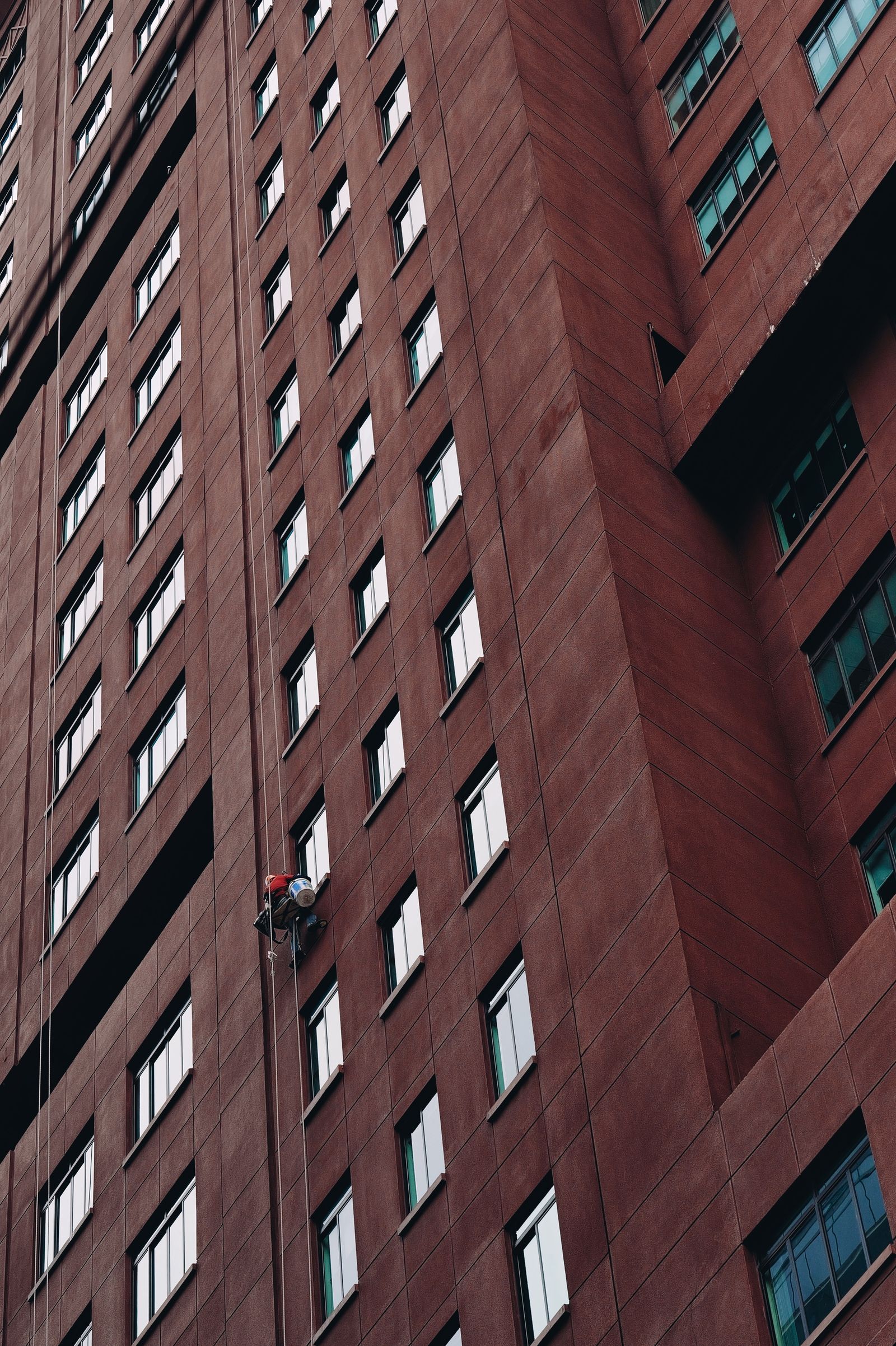
Access changes the decision too. A drone-assisted application or rinse may support a broad upper wall when the building has sufficient setback, clear flight space, suitable wind, and controllable ground activity. Balconies, wires, trees, rooftop equipment, narrow streets, public sidewalks, event crowds, airport restrictions, and neighboring structures can make that approach unsuitable. Commercial drone operations must follow FAA requirements and any needed airspace authorization. A proposal should say where aerial support is expected, where it is not, and what backup method applies if conditions change.
Contact cleaning remains the right choice for some finishes. Squeegee-quality glass, frames, recessed trim, bonded deposits, construction residue, and fine architectural details may need a person, pole, lift, or specialty tool. A hybrid plan is often more honest and more useful than promising that one machine will deliver the same result on every elevation. The quote should map each method to a zone and describe what the owner will see at closeout.
Treat harbor weather and drainage as part of method selection
Wind off the harbor and Patapsco, humid summers, spring pollen, heavy rain, tropical-weather remnants, autumn debris, and winter freeze-thaw cycles can change dwell time, drying, visibility, footing, and runoff. Salt and road residue may be concentrated on lower elevations, while shaded courtyards and rowhouse alleys can stay damp. Weather also affects aerial equipment, spray movement, public controls, and whether a walking surface remains safe. A method that looks appropriate in a dry test may need a different sequence when the facade is wet, the wind shifts, or temperatures drop.
Drainage must be reviewed before the rinse, not after water reaches a curb inlet. Baltimore properties may send flow toward storm drains, landscaped beds, garages, alleys, loading areas, or harbor-connected systems. The actual products, soil load, rinse volume, surface slope, receiving path, and applicable requirements determine the controls. A visible drain is not automatic permission to discharge into it. The work plan may call for protection, diversion, collection, recovery, reduced rinse volume, filtration, disposal, or coordination with the responsible authority. If the observed path changes, pausing and revising the plan protects the property and the surrounding water system.
Use a quote that makes the tradeoffs easy to approve
A comparable Baltimore proposal should list the facade materials, visible conditions, service zones, method for each zone, expected finish, test-area needs, exclusions, access assumptions, operating window, weather limits, water plan, public controls, and closeout documentation. Ask whether the price includes broad wall washing, upper glass rinsing, canopy and parapet work, contact detail, hard-water removal, salt or marine residue, construction film, graffiti, or only a general rinse. Those services should not be blended into a vague phrase such as complete building cleaning.
Provide the address, wide and close photographs, approximate heights, known repairs, priority elevations, water access, drainage observations, event dates, tenant or guest restrictions, deliveries, parking rules, security requirements, and the result you want. A site review or test area may be appropriate before final pricing. We can recommend a one-time reset, a phased entrance-first plan, a hybrid access scope, or recurring maintenance based on actual exposure and resoiling. Call +1 239-351-2897, email contact@dronebuildingcleaners.com, or use the quote form to start the conversation.